A new-generation premium double-cab bakkie concept designed to look and feel fundamentally different from conventional pickup interiors and exteriors. VANTARA combines a distinctive vehicle identity, a purpose-designed cockpit and a proposed Dynamic Surround Awareness safety architecture.
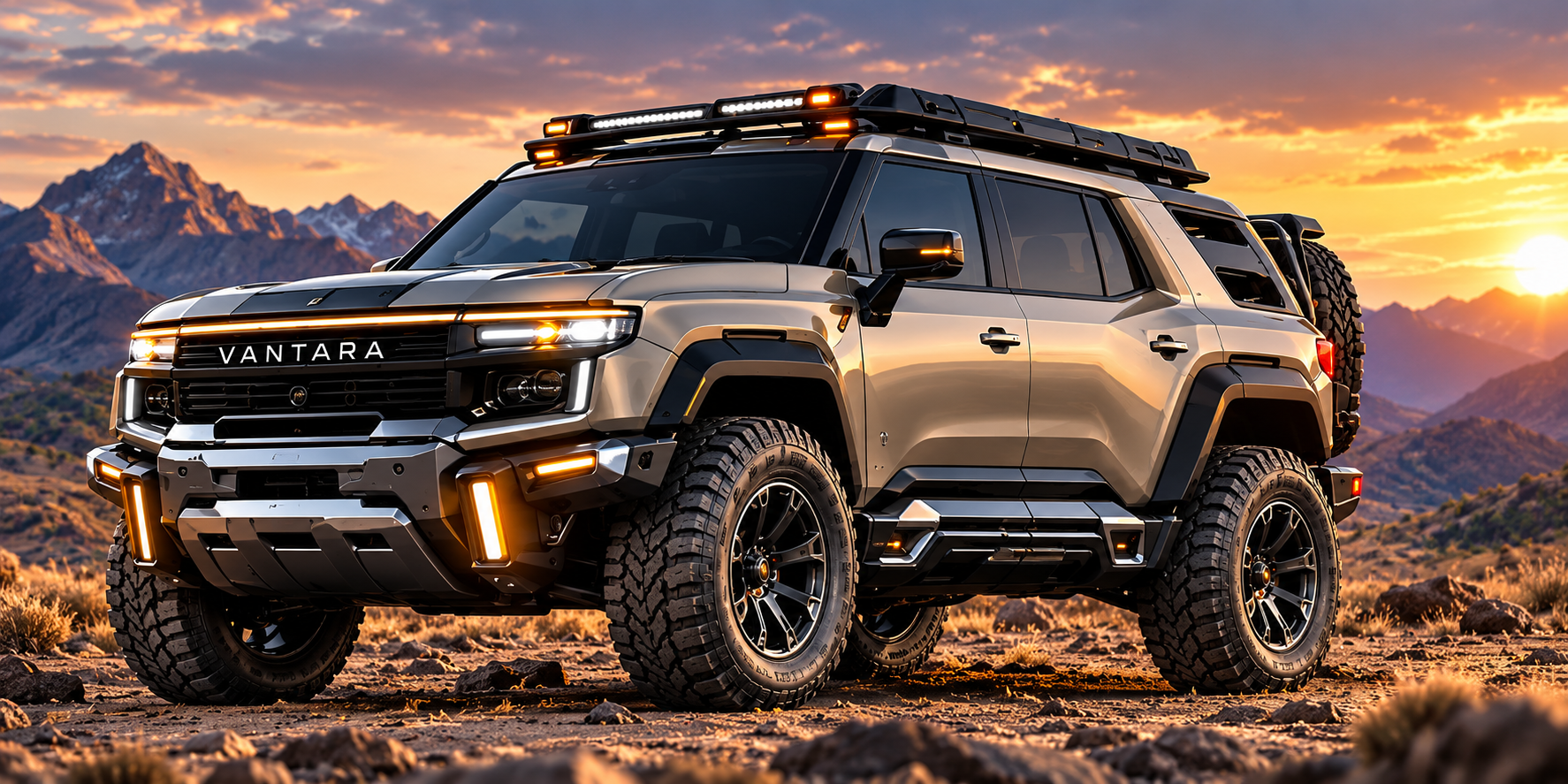
VANTARA is defined as a complete vehicle concept, not a styling-only mock-up. The engineering package covers the complete bakkie: body and chassis, powertrain, driveline, suspension, steering, brakes, airbags, crash structure, ADAS, Dynamic Surround Awareness, electrical/electronic systems, HVAC, lighting, infotainment, load bed, towing and validation.
The approved VANTARA design combines a premium double-cab proportion, integrated load-bed identity and a purpose-designed vehicle system architecture.
The package covers structure, propulsion, chassis, restraint systems, electronics, thermal systems, cabin systems, utility functions and manufacturing/validation.
Dynamic Surround Awareness is proposed as a spatial vehicle-awareness architecture rather than an ordinary stitched 360° camera view.
The visual direction is deliberately premium, compact-looking and purposeful rather than oversized or exaggerated.
Strong stance, integrated lighting, sculpted body surfaces and a cohesive cab-to-bed design.
Wraparound driver zone, integrated displays, physical controls and premium durable materials.
A proposed spatial-awareness architecture that relates detected surroundings to vehicle movement and projected path.
Load bed, towing, off-road provisions, storage, recovery and work-oriented equipment are part of the vehicle definition.
The vehicle definition includes the equipment and systems expected around the adaptive architecture.
Front and rear integrated safety modules are designed into the vehicle architecture, with directional visibility toward forward, rearward and lateral/oblique viewing zones. Final lighting performance must still be engineered and tested against the target-market regulations.
The VANTARA package is complete at preliminary engineering and acquisition-package level. The next real-world stage is detailed CAD/CAE, supplier-grade component definition, prototype fabrication, physical testing and professional IP/legal review.
Architecture, kinematics, load paths, retention, control logic, vehicle systems, materials/tolerance strategy, FMEA and validation programme.
No road-legal certification, crash certification, physical prototype validation or granted patent is claimed by this presentation.
The acquisition package includes the controlled engineering records, vehicle-level load model, FEA load-case definition, safety/control records, IP records and approved visual reference.